The frontend ecosystem evolves quickly. These four frameworks are gaining momentum in 2026 and can significantly improve developer productivity, performance, and scalability.
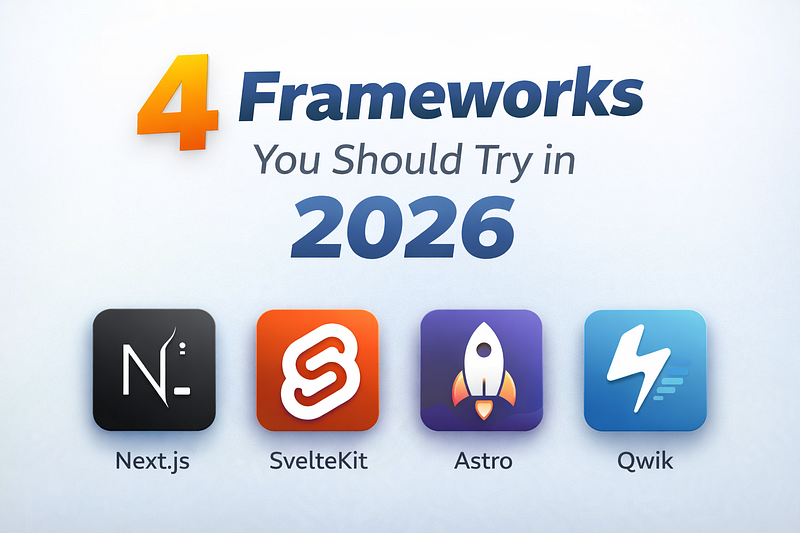
4 Frameworks You Should Try in 2026
The web development ecosystem moves incredibly fast. Every year, new frameworks appear promising better performance, developer experience, and scalability.
But trying every new tool isn’t practical. The key is identifying frameworks that solve real problems, improve workflow, and are gaining strong adoption.
In this article, we’ll explore 4 frameworks worth exploring in 2026 — tools that are shaping modern frontend and full-stack development.
Whether you’re a frontend developer, full-stack engineer, or someone looking to modernize your stack, these frameworks are worth your attention.
1. Next.js — The Full-Stack React Powerhouse
Why Developers Love It
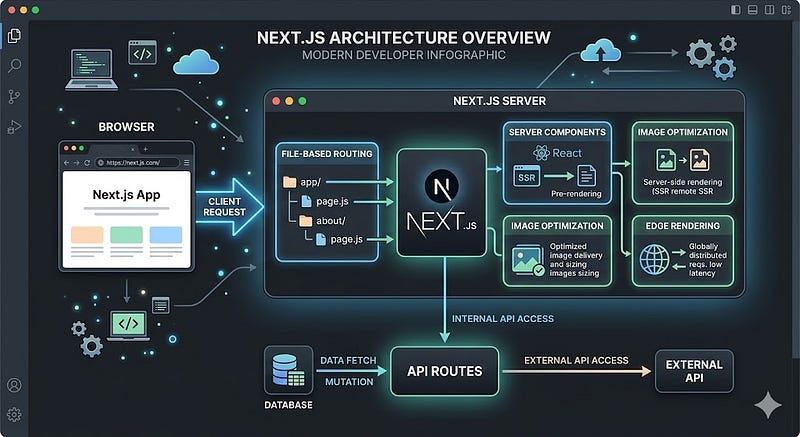
Next.js has evolved far beyond a simple React framework. It now provides a complete full-stack solution with powerful features built directly into the framework.
Key features include:
- Server Components
- File-based routing
- Built-in API routes
- Image optimization
- Streaming and edge rendering
This allows developers to build fast, scalable production apps with minimal configuration.
Example: Simple Next.js Page
export default function Home() {
  return (
    <div>
      <h1>Hello Next.js</h1>
      <p>Your app is running!</p>
    </div>
  );
}
With Next.js, routing is automatically handled by the file system.
app/
 ├── page.js
 ├── about/
 │    └── page.js
This creates:
//about
No manual router configuration needed.
When to Use Next.js
Next.js is ideal for:
- Production React applications
- SEO-friendly websites
- Full-stack JavaScript projects
- Large scalable applications
2. SvelteKit — Less Code, Faster Apps
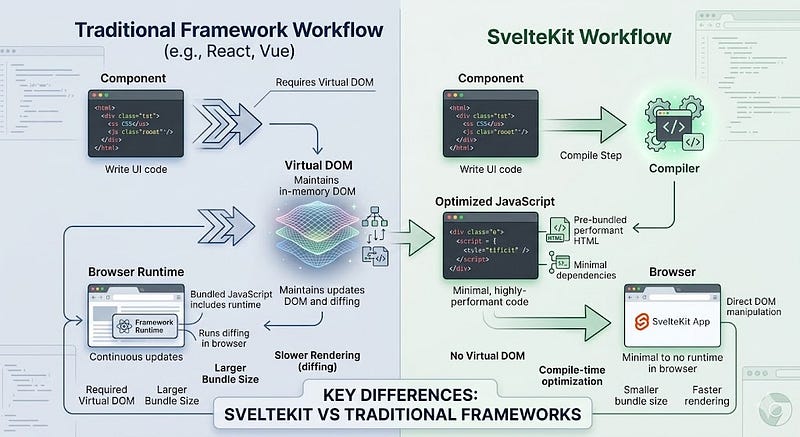
SvelteKit takes a different approach compared to traditional frameworks.
Instead of doing heavy work in the browser, it compiles components into optimized JavaScript during build time.
This leads to:
- Smaller bundles
- Faster rendering
- Less runtime overhead
Example: Svelte Component
<script>
  let count = 0;
  function increment() {
    count += 1;
  }
</script>

<button on:click={increment}>
  Clicked {count} times
</button>
Unlike React or Vue, Svelte uses no virtual DOM, making updates extremely fast.
Why Developers Are Switching
Developers appreciate Svelte because:
- Simpler syntax
- Less boilerplate
- Better performance out of the box
3. Astro — Perfect for Content-Heavy Websites

Astro has quickly become popular for building high-performance websites.
Its biggest innovation is partial hydration, meaning JavaScript only loads where needed.
This dramatically improves performance.
Example: Astro Component
---
const title = "Hello Astro";
---

<h1>{title}</h1>
Astro also allows mixing frameworks in the same project:
- React
- Vue
- Svelte
- Solid
Example:
<MyReactComponent client:load />
Best Use Cases
Astro works extremely well for:
- Blogs
- Documentation sites
- Marketing pages
- Static content websites
If performance and SEO are priorities, Astro is an excellent choice.
4. Qwik — Instant Loading Web Apps

Qwik is one of the most innovative frameworks, gaining attention.
Its main idea is resumability.
Instead of hydrating the entire application like React, Qwik resumes execution exactly where the server left off.
This results in:
- Near-instant page loads
- Extremely small JavaScript bundles
- Better performance on slow devices
Example
import { component$, useSignal } from "@builder.io/qwik";

export default component$(() => {
  const count = useSignal(0);
  return (
    <button onClick$={() => count.value++}>
      Count: {count.value}
    </button>
  );
});
Even interactive components load only when needed.
Why Qwik Matters
Performance is becoming increasingly important, especially for:
- mobile users
- global applications
- large enterprise sites
Qwik’s architecture directly targets these challenges.
Comparing the Frameworks

Each framework targets a different development style and performance strategy.
Key Takeaways
Here are the most important insights:
- Next.js remains the strongest React full-stack framework.
- SvelteKit focuses on simplicity and high performance.
- Astro is ideal for content-heavy websites with minimal JavaScript.
- Qwik introduces a new architecture for ultra-fast applications.
Learning multiple frameworks can significantly improve your adaptability as a developer.
What Should You Try First?
If you’re choosing where to start:
- React developers → Next.js
- Developers wanting simplicity → SvelteKit
- Content-focused projects → Astro
- Performance experimentation → Qwik
Exploring these tools helps you understand different approaches to building modern web apps.
Strong Call to Action
The best way to understand a framework is to build something with it.
Pick one framework from this list and create a small project this week:
- a blog with Astro
- a dashboard with Next.js
- an interactive app with SvelteKit
- a performance experiment with Qwik
You might discover a new favorite tool that transforms how you build web applications.







Leave a Reply